
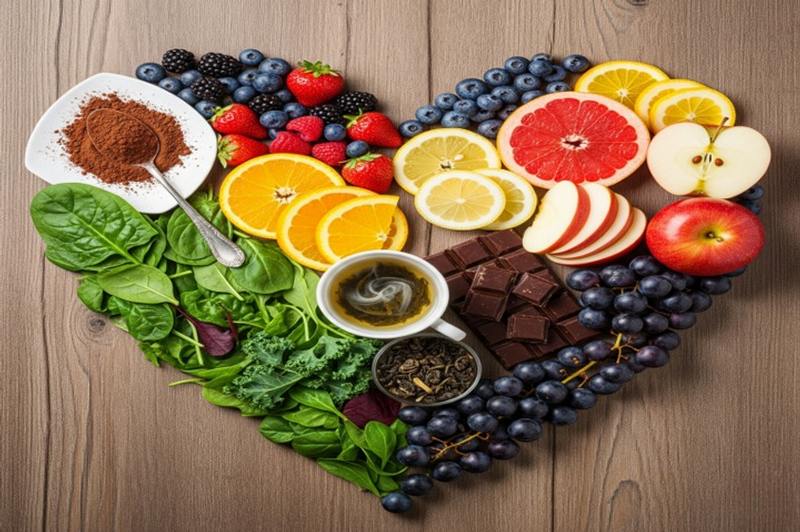
Flavonoids are natural compounds found in many plant-based foods, including tea, berries, apples, citrus fruits, and cocoa. They are often discussed in food and nutrition research, leading many people to ask: how much flavonoids per day should you consume?
The answer depends on your food choices and the types of flavonoids being measured. There is no officially established daily intake for total flavonoids. However, understanding their food sources, differences, and preparation methods can help you make informed choices.
This guide covers daily flavonoid intake, common food sources, cocoa flavanols, and practical ways to include these compounds in everyday meals.
What Are Flavonoids?
Flavonoids are plant compounds that belong to a larger group called polyphenols. They occur naturally in fruits, vegetables, tea, cocoa, and other plant-based foods.
There are several types of flavonoids, each with different chemical structures. Common groups include:
- Flavanols: Found in cocoa, tea, apples, and some other foods.
- Anthocyanins: Present in blueberries, blackberries, and other colorful fruits.
- Flavanones: Common in oranges, lemons, and other citrus fruits.
- Flavonols: Found in foods such as apples, onions, and berries.
- Flavones: Present in certain herbs, vegetables, and plant foods.
These categories help explain why different foods contain different flavonoid profiles. The term does not refer to one single compound, so total flavonoid content can vary considerably between foods.
How Much Flavonoids Per Day Should You Consume?
There is no official recommended daily allowance for total flavonoids. Unlike nutrients with established dietary reference values, flavonoids do not have one universally accepted daily requirement.
Some articles discuss intake levels of 500–1,000 milligrams per day. However, this range should not be treated as an official recommendation for everyone. Research varies in the compounds measured, the foods studied, and the methods used to estimate intake.
When reviewing daily flavonoid intake, consider three important points:
- Food variety: Different foods supply different types of flavonoids.
- Measurement methods: Studies may measure individual compounds or broader groups.
- Serving size: The amount consumed affects the total quantity obtained from food.
For this reason, a single milligram target cannot accurately describe the needs of every individual. Food composition data can help estimate intake, but figures should be interpreted according to the specific food and flavonoid being measured.
Which Foods Are Good Sources of Flavonoids?
Many everyday foods contain flavonoids. Their amounts depend on variety, ripeness, storage, processing, and preparation.
|
Food |
Common flavonoid types |
|
Green tea |
Catechins |
|
Black tea |
Theaflavins and other flavonoids |
|
Blueberries |
Anthocyanins |
|
Apples |
Flavanols and flavonols |
|
Oranges |
Flavanones |
|
Onions |
Quercetin |
|
Cocoa powder |
Cocoa flavanols |
|
Dark chocolate |
Flavanols in varying amounts |
These examples offer a starting point for comparing food sources. Exact quantities should not be assumed because products within the same category can have different compositions.
If you want to estimate your daily intake, check reliable food composition databases or product information that identifies the specific flavonoids and serving sizes.
Is Cocoa Powder High in Flavonoids?
Cocoa powder is a notable source of cocoa flavanols, a subgroup of flavonoids naturally present in cacao beans. It is commonly used in beverages, baking, smoothies, and desserts.
However, cocoa powders differ in their flavanol content. The cacao variety, fermentation, roasting, and other processing steps can affect the final composition.
One important distinction is between natural cocoa powder and Dutch-processed cocoa powder. Dutch processing uses an alkaline treatment to reduce acidity and change cocoa's color and flavor. This treatment can reduce flavanol content, although the amount varies according to the processing conditions.
When choosing cocoa powder, consider:
- Processing method: Check whether the product is alkalized or non-alkalized.
- Flavanol measurements: Look for reliable product-specific information when available.
- Serving size: Compare products using similar quantities.
- Ingredients: Review the label to understand what the product contains.
How Can You Add Flavonoid Sources to Your Daily Diet?
Including different flavonoid-containing foods can be straightforward. Choose ingredients that fit your regular meals instead of relying on one food as your primary source.
Add Berries to Breakfast
Blueberries, strawberries, and blackberries can be added to oatmeal, yogurt, or breakfast bowls. Each fruit has a different composition, offering variety in your food choices.
Drink Green or Black Tea
Tea provides flavonoids called flavan-3-ols. The amount in a cup depends on the tea variety, brewing time, water temperature, and quantity of leaves used.
Use Cocoa in Recipes
Cocoa powder works well in smoothies, oatmeal, homemade desserts, and baked goods. Compare processing methods if you want to know more about the flavanol content of your chosen product.
Include Different Fruits and Vegetables
Apples, oranges, onions, and other plant foods provide different flavonoid groups. Rotating ingredients throughout the week gives you a wider selection of food sources.
Check Product Information
Food packaging does not always list flavonoid quantities. If the amount matters to your comparison, look for specific measurements from the manufacturer rather than estimating from color, taste, or product names.
What Changes the Flavonoid Content of Food?
Flavonoid levels are not fixed. Several factors can influence the quantities present in a food when it reaches your plate.
Variety and growing conditions: Different plant varieties can contain different concentrations of individual compounds.
Ripeness and storage: The stage of ripeness and conditions during storage may affect flavonoid composition.
Processing methods: Roasting, fermentation, heating, and alkalization can change the levels of particular compounds.
Food preparation: Brewing tea for different lengths of time or using different ingredient quantities can affect the flavonoids in the final serving.
These differences explain why general estimates should be treated as approximations rather than exact values for every product.
Find the Right Cocoa Powder for Your Recipes
Flavonoids come from a range of familiar foods, and there is no established daily requirement for total flavonoid intake. Tea, berries, apples, citrus fruits, and cocoa each provide different compounds.
Frequently Asked Questions
Is there a recommended daily amount of flavonoids?
No official daily intake has been established for total flavonoids. Figures such as 500–1,000 milligrams appear in some discussions, but they are not universal dietary recommendations. The amount measured depends on the specific flavonoids, foods consumed, serving sizes, and research methods used.
Which foods contain the most flavonoids?
Tea, cocoa, berries, apples, citrus fruits, and onions are common sources of different flavonoid groups. However, their exact amounts vary by variety, processing, and preparation. There is no single ranking that applies to every product, so reliable composition data is useful when comparing specific foods.
Does cocoa powder contain flavonoids?
Yes. Cocoa powder naturally contains cocoa flavanols, which belong to the flavonoid family. However, the quantity varies with cacao variety and processing methods. Fermentation, roasting, and alkalization can affect the final composition, so product-specific information is more useful than assuming every cocoa powder contains equal amounts.
Does Dutch-processed cocoa have fewer flavanols?
Dutch-processed cocoa undergoes alkaline treatment to reduce acidity and change its color and flavor. This process can lower cocoa flavanol content, although the extent depends on the processing conditions. Check the manufacturer's product information when comparing cocoa powders, since the processing method alone does not provide an exact measurement.
What is the difference between flavonoids and flavanols?
Flavonoids are a broad family of plant compounds, while flavanols are one subgroup within that family. Cocoa and tea contain flavanols, whereas foods such as citrus fruits provide other flavonoid types. This distinction matters when reading research or comparing products because total flavonoids and individual flavanol measurements are different.
How can you estimate your daily flavonoid intake?
Start by identifying your usual sources, such as tea, fruit, vegetables, and cocoa. Then review serving sizes and reliable composition data for the specific compounds being measured. Because flavonoid levels vary between products and preparation methods, any calculation will be an estimate rather than an exact universal daily target.