
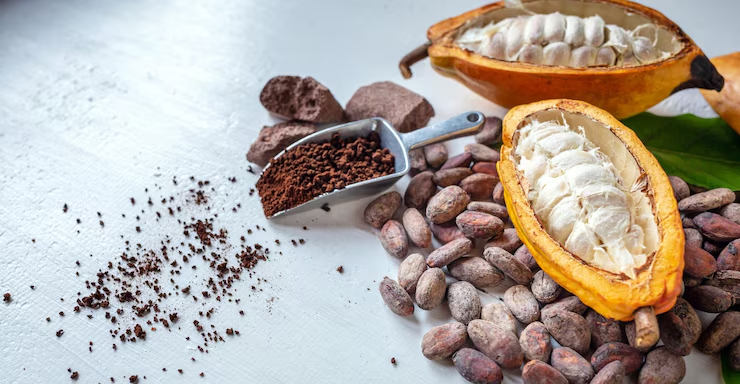
When you hear “chocolate,” you might think of a sweet treat. But chocolate starts with cacao beans, which also come in the forms of cacao nibs and unsweetened cacao powder.
Pure cacao is a versatile food ingredient, naturally rich in taste and unique in its nutritional profile. Use in smoothies, oatmeal, drinks, baking, desserts and other recipes.
Unsweetened cacao powder need not contain added sugar like many finished chocolate products do, so it is a versatile option for many different culinary uses.
What Is Pure Cacao?
Pure cacao comes from the seeds of Theobroma cacao tree which grows mainly in tropical regions of Central, South America, and other cacao-growing areas.
After cacao pods are harvested, the seeds are fermented then dried. They can later be made into cacao nibs, cacao powder, and other cacao products.
Pure cacao is different from a typical chocolate bar. A chocolate product may contain cacao along with sugar, cocoa butter, milk ingredients, and other additions. Unsweetened cacao powder, by comparison is a more concentrated cacao ingredient without the sweetness of finished chocolate.
What to Know About Pure Cacao
Natural Occurrence of Cocoa Compounds
Cocoa has polyphenols and cocoa flavanols and things like that naturally. Theobromine content can vary with the source of the cacao and processing.
Nutritional Composition
Cacao is rich in naturally occurring nutrients and compounds, with the exact nutritional profile depending on the product and serving size. The best guide is the nutrition facts on the product.
Naturally Occurring Theobromine and Caffeine
Cacao naturally contains trace amounts of caffeine and theobromine. Amount may vary depending on the cacao product and serving size.
Fiber Content
Dietary fiber is found in unsweetened cacao powder. The fiber content varies from product to product, so the best way to determine the amount of fiber in a specific serving is to examine the nutrition facts.
Cocoa Flavanols
Cacao contains natural compounds, known as cocoa flavanols. Their presence and concentrations will depend on source of cacao, processing methods, and type of chocolate product.
Cacao in Everyday Recipes
You can add cacao to many recipes including smoothies, oatmeal, baked goods, beverages, energy balls, sauces and desserts. It is a rich natural flavor and versatile ingredient for traditional recipes.
Also Read: Cacao vs Dark Chocolate: A Closer Look at Nutrition, Processing and Uses
Nutritional Value of Pure Cacao Powder
Pure cacao’s nutrition information will depend on the product, how it’s processed and how much you eat. Since nutritional information may vary from product to product, the product label will give you the most accurate information for a particular serving.
Cacao powder has nutrients such as protein, fiber, fat, carbohydrates, magnesium and iron. It may also contain lesser amounts of other natural nutrients and minerals.
| Nutrient | Approximate amount per 28 g |
| Calories | 120–130 |
| Protein | 3–4 g |
| Fiber | 3–4 g |
| Fat | 6–8 g |
| Carbohydrates | 12–15 g |
| Magnesium | 100–120 mg |
| Iron | 2–3 mg |
How to Use Pure Cacao in Recipes?
A simple way to enjoy pure cacao is to sprinkle a little on foods you like.
-
Add Cacao Powder to Smoothies
Mix unsweetened cacao powder with milk, dairy-free alternative, fruit, nuts, seeds or yogurt. It provides a naturally rich chocolate flavor without having to add a lot of sugar.
-
Make Hot Cacao
Mix pure cacao powder with warm milk, or a dairy-free alternative. If you want additional sweetness, use a small amount of your preferred sweetener.
-
Bake With Cacao
Cacao powder can be used in brownies, muffins, cookies, cakes, and other recipes. Keep in mind that adding sugar and other ingredients changes the overall nutritional profile of the finished food.
-
Add Cacao Nibs as a Topping
Cacao nibs provide a crunchy texture, and naturally intense cacao flavor. Try them over oatmeal, yogurt, smoothie bowls or granola.
-
Make Cacao Energy Balls
Combine cacao powder with ingredients such as nuts, seeds, oats and a small amount of natural sweetener. These can make a convenient snack when portion sizes are kept reasonable.
Can You Use Pure Cacao Every Day?
Pure cacao makes a great ingredient in many recipes. It is contingent upon the product, serving size and other ingredients used in the recipe as to how it fits into a person’s food choices.
Unsweetened cacao powder can be added to:
- Smoothies
- Oatmeal
- Yogurt
- Homemade beverages
- Baked products
- Desserts
- Energy Bites
How to Choose Pure Cacao?
When selecting cacao powder keep the following in mind:
Ingredient list: Look at the ingredients to see what the product has in it.
Nutrition information: See nutrition facts for information on the nutritional content of the product.
Processing information: Available product information on how the cacao is processed.
Serving size: Compare products using the serving size that is listed.
The words “raw,” “natural,” cacao and cocoa powder can have different meanings from one product to another. The product may become clearer when comparing the ingredient list, processing information and nutrition facts.
Why Pure Cacao Is a Versatile Ingredient
Pure cacao is a versatile food ingredient that brings a rich chocolate flavor to smoothies, oatmeal, beverages, baked goods, desserts, sauces, and more. Its naturally occurring nutrients and cocoa compounds add to its distinctive nutritional profile, while its simple ingredient format makes it easy to use across different recipes.
When choosing cacao powder, the ingredient list, nutrition facts, processing information, and serving size can help you understand the product and compare different options.
Ultimately, pure cacao is a simple, flexible ingredient that gives you plenty of ways to bring the distinctive flavor of cacao into the foods you already enjoy.
Disclaimer: This blog is for general informational purposes only. Statements regarding pure cacao are not intended to diagnose, treat, cure, or prevent any disease. Always consult a qualified health professional with questions about your diet or health.
Frequently Asked Questions
1. What is pure cacao powder?
Cacao powder is a pure ingredient that is made from cacao beans. It has a naturally deep flavor, and is versatile to use in beverages, baking, desserts, smoothies and many other recipes.
2. What is in cacao powder?
Cacao powder is packed with natural compounds and nutrients. The exact content may vary depending on the origin of the cacao, the processing and the product.
3. What type of cacao powder should you choose?
When evaluating cacao powders, consider the ingredient list, nutrition facts, how the product was processed, and how you intend to use the product in the kitchen.
4. Does cacao contain caffeine?
Cacao does actually have a little caffeine and theobromine in it. It is contingent upon the product and serving size.
5. Are cacao and cocoa powder the same thing?
Both cacao and cocoa powder come from cacao beans. The terminology differs between processing and product, so it’s useful to look at the ingredients, processing information, and nutrition facts of the specific product rather than just the name.
6. Can you use cacao every day?
Cacao can be used on a regular basis as an ingredient to a variety of recipes. How much you need depends on the product, serving size and how it is used in a recipe.
7. Does pure cacao contain added sugar?
Unsweetened pure cacao powder does not have sugar added. Some cacao products may contain sugar or other ingredients, so it’s always a good idea to check the ingredient list.