
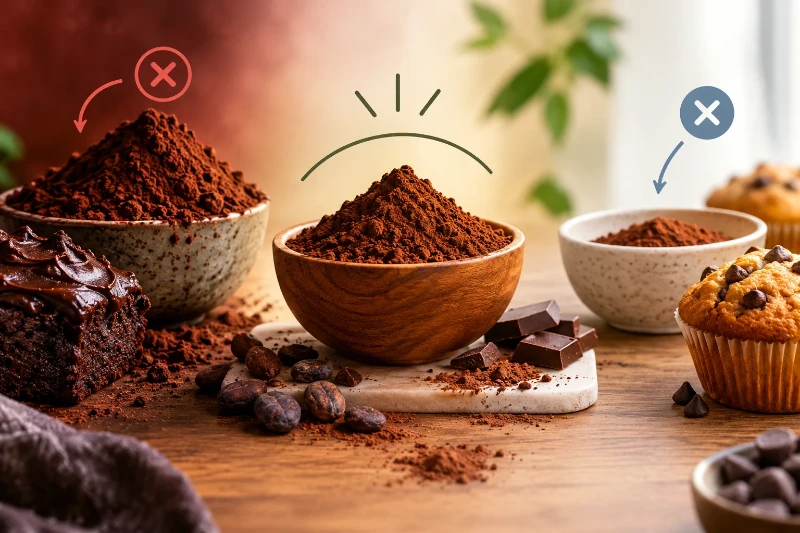
Use high flavanol cocoa powder to add a rich cocoa flavor and dark color to baked goods, smoothies, desserts and other recipes. But the right amount is important. Too little and the cocoa flavor can be hard to detect, too much and a recipe can taste too bitter or dry.
If you are asking about the right high flavanol cocoa powder baking ratio, the answer depends on the recipe, the other ingredients and the type of cocoa powder that you are using.
If you know the cocoa powder ratio, you can change recipes and still have the right texture and flavor.
What Is a Cocoa Powder Ratio?
It is a ratio of cocoa powder to other dry or wet ingredients in a recipe.
For example, a cookie recipe may use 1½ cups of flour to ¼ cup of cocoa powder. In this case, the cocoa is included in the total dry ingredients.
Consider what the cocoa powder is replacing when changing the amount of cocoa powder in recipes. If you substitute any of the flour, it throws the balance of the entire recipe off.
This can be particularly useful with high flavanol cocoa powder, where a little can deliver a lot of cocoa flavor.
How Do You Calculate Cocoa Powder Ratios for Baking?
How do you calculate cocoa powder ratios for baking? First, look at the amount of cocoa powder versus flour or other dry ingredients.
A simple formula is that:
Cocoa powder ratio = cocoa powder ÷ total flour or dry ingredients
For example, if a recipe contains:
- ¼ cup cocoa powder
- 1½ cups flour
Ratio of cocoa to flour is:
¼ ÷ 1½ = 1:6
That works out to about 1 part cocoa powder to 6 parts flour.
This can come in handy when you’re scaling or changing a recipe, although the perfect ratio varies from cake to cake, cookie to cookie, brownie to brownie, muffin to muffin, etc.
A Practical High Flavanol Cocoa Powder Baking Ratio
There is no one set cocoa powder high flavanol cocoa powder baking ratio for every recipe.
It varies based on the recipe but a general starting point is to replace about 5-15% of the flour (by weight) with cocoa powder.
For example, if a recipe calls for 200 grams of flour, you might try:
- 10 grams cocoa powder for a mild cocoa note
- 20 grams for a stronger flavor
- 30 grams for a more intense cocoa taste
This also depends on the type of cocoa powder. But high-flavanol cocoa powders can have a strong taste, so it’s best to test a small amount first to find the right level for your recipe.
How Much Cocoa Powder Should You Use in Common Recipes?
The ideal amount of cocoa powder in recipes varies by the type of food you're making.
Cookies
Cookies are made up of things like flour, fat and sugar and other things so they can normally handle a reasonable amount of cocoa powder.
2 to 4 tablespoons is a good place to start for a typical batch.
Brownies
A brownie can take more cocoa powder than most cookies . Brownies have a stronger cocoa flavor .
The amount of cocoa powder used can be anywhere from ¼-¾ cup depending on the recipe. Don't simply add more cocoa powder. Use the correct ratio of flour, cocoa, fat, sugar, and eggs as per the recipe.
Cakes
Cakes are more sensitive, because the dry ingredients affect the structure.
If you are using a vanilla cake recipe, replace some of the flour with cocoa powder! Do not just dump a bunch of cocoa powder into the vanilla cake batter.
Muffins
Muffins usually take a little to moderate amount of cocoa powder.
A typical batch might need 2–4 tablespoons, especially if you add banana, berries, nuts, chocolate or coffee.
Smoothies
Cocoa powder, however, is not a structural ingredient in a smoothie. Begin with 1-2 teaspoons, gradually increasing to taste.
For more ideas, try this high flavanol smoothie recipe.
Does High Flavanol Cocoa Powder Change a Recipe?
It can.
High flavanol cocoa powder may be more cocoa-flavored than regular cocoa powder. It’s acidity, processing method, particle size, and other characteristics can also vary from product to product.
This means that a 1:1 substitution may not always lead to the same result.
In recipes like cakes and other leavened baked goods where the chemical balance can be affected by the cocoa powder, the type of cocoa powder can be even more important.
Signs You've Used Too Much Cocoa Powder
Too much cocoa powder can also affect flavor and texture.
You might see:
- A very bitter or intense cocoa flavor
- A dry or crumbly texture
- Color darker than expected
- Less sugar
- A thicker final product
- A more powerful aftertaste
In this case, cut back on the cocoa powder in the next batch or tweak the flour and other ingredients.
Signs You've Used Too Little Cocoa Powder
Too little cocoa powder usually leads to a milder product.
You may observe:
- A slight cocoa flavor
- A lighter shade
- More noticeable flour or dairy flavors
- Less chocolate flavor
If the texture is already perfect but the cocoa flavor is weak, increase the amount gradually in the next batch.
Tips for Getting the Right Cocoa Powder Ratio
Here are some simple practices to help make recipe testing easier.
1. Weigh Your Ingredients
Measuring with a kitchen scale is more consistent than relying on cups and spoons alone.
2. Make Small Adjustments
If you see a recipe that calls for 20 grams of cocoa powder, try 25 or 30 grams instead of making a big leap.
3. Consider the Other Flavors
Coffee, vanilla, cinnamon, berries, banana, nuts and chocolate can change the intensity of the cocoa.
4. Check the Cocoa Powder Type
Natural and dutch process cocoa powders behave differently in recipes. Use as directed on product.
5. Keep Notes
See how much cocoa powder, flour, sugar, fat and liquid are used. This makes it easier to replicate a successful batch.
Can You Adjust Cocoa Powder Without Changing the Whole Recipe?
Sometimes, yes.
If you only want a little more chocolate flavor, you may only need a little more. More drastic changes can impact the texture and chemical balance of baked goods.
A little more cocoa powder in the cake batter can alter the moisture and texture.
If you want to make big changes, don't think of the cocoa powder as an addition, think of it as part of the dry ingredients, and compensate with the flour and other dry ingredients.
How to Find Your Ideal Cocoa Powder Ratio
The best cocoa powder ratio depends on the recipe and your desired flavor.
One approach that is helpful is to make small test batches, holding the other ingredients constant.
For example, if you’re creating a cookie recipe, you could test:
|
Test |
Flour |
Cocoa Powder |
|
Mild |
190 g |
10 g |
|
Medium |
180 g |
20 g |
|
Strong |
170 g |
30 g |
Compare each batch for flavor, texture, color and overall balance. This provides a practical means of determining the amount that works best for your recipe.
Ready to Find the Right Cocoa Ratio for Your Recipes?
Guesswork is not necessary when determining the proper high flavanol cocoa powder baking ratio. Start with a reasonable amount, measure your ingredients carefully, and test small changes until you find the flavor and texture you want.
Cookies or cakes, brownies or muffins, a simple ratio and a few small test batches and you’ll get to that magic amount of cocoa powder in recipes.
Frequently Asked Questions
How do you calculate cocoa powder ratios for baking?
Then you divide the amount of cocoa powder, by the amount of flour or total dry ingredients you are comparing it to. For example, 20 grams of cocoa powder to 180 grams of flour, the ratio of cocoa to flour is 1:9.
What is a good high flavanol cocoa powder baking ratio?
There is no one ratio for all recipes. A good place to start is to replace 5 to 15 percent of the weight of the flour with cocoa powder, and then adjust to make it work for the recipe and the flavor you want.
Can I add cocoa powder without reducing the flour?
Sure , but a larger addition might alter the texture of baked goods . If you are making big changes to the recipe, tweak the flour and other dry ingredients to keep the intended balance.
How much cocoa powder should I use in recipes?
Depends on the recipe A few tablespoons added to cookies and muffins is OK, but brownies will take a lot more. Use a small amount for smoothies and add to taste.
Does high flavanol cocoa powder taste more bitter?
High flavanol cocoa powder can have a strong cocoa flavor but the flavor depends on the product and how it is processed. Check the product specifications and adjust the quantity to your taste.
Can I substitute high flavanol cocoa powder for regular cocoa powder?
It can be done but it is contingent upon the processing of the cocoa powder and how acidic or strong. Test a small batch before changing a full recipe and check the guidance on the product.
What happens if I use too much cocoa powder?
You can also end up with a dry, dense or crumbly product if you add too much cocoa powder to your recipe, which can also make it taste bitter. Try decreasing the amount in the next batch and see how the balance of the other dry ingredients looks.