
Measuring chocolate correctly can shape the taste, texture, calories, and consistency of your recipe. No kitchen scale? Simple methods can help you measure portions with confidence.
So how do you measure 1 oz of chocolate? The easiest method depends on the form of chocolate. As a general guide, 1 oz of chocolate in grams is about 28 grams. For chocolate bars, use the scored sections as a guide, since the size of each square can differ.
This 1 oz chocolate measurement guide explains how to estimate 1 ounce of chocolate in bars, chips, chunks, and wafers, along with practical substitution tips.
How Does 1 Oz of Chocolate Look?
One ounce of chocolate can look different depending on its shape, thickness, and density.
Here are some general estimates
| Chocolate form | Approximate amount for 1 oz |
| Chocolate bar | 1/4 of a 4-oz bar |
| Chocolate chips | About 1/4 cup |
| Chocolate chunks | About 1/4 cup, depending on chunk size |
| Chocolate wafers | About 1/4 cup, depending on the size and thickness. |
| Chocolate squares | Often 1–2 squares, depending on the bar |
These are estimates rather than exact conversions. For recipes where precision matters especially baking, weighing chocolate is the most reliable option.
Understanding Chocolate Measurements
Why Is 1 Oz Commonly Used?
One ounce is a convenient amount for many recipes and equals approximately 28 grams, though some recipes and food labels may use a slightly different figure.
Chocolate is often measured by weight because different forms have different densities. For example, one ounce of chocolate chips may take up more, or less space than one ounce of a solid chocolate bar.
Using weight rather than volume helps maintain consistency when preparing brownies, cookies, cakes, ganache, and other recipes.
Different Types of Chocolate
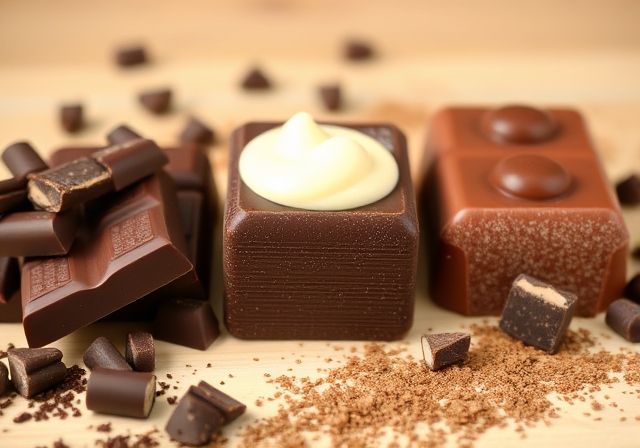
Chocolate can look different by weight. Dark, milk, and unsweetened chocolate may have different textures, densities or ingredients.
Dark Chocolate
Dark chocolate generally contains a higher proportion of cocoa ingredients, and has a richer more intense flavor. One ounce of dark chocolate may look slightly different from one ounce of another chocolate depending on the bar's shape and thickness.
Milk Chocolate
Milk chocolate contains milk ingredients, and usually more sugar than dark chocolate. Its texture is often softer, and creamier.
Unsweetened Chocolate
Unsweetened chocolate contains cocoa solids and cocoa butter without the added sugar found in sweetened chocolate. It is commonly used in baking when the recipe provides its own sugar.
Because chocolate bars come in different sizes and shapes, the number of squares that equals 1 ounce varies by brand.
What Does 1 Oz of Chocolate Look Like in Different Forms?
Chocolate Bars
For a standard 4 ounce chocolate bar divided into four equal sections, one quarter of the bar is approximately 1 ounce.
However, not every chocolate bar is divided this way. Some bars have many small scored squares while others have large pieces, or irregular sections.
If the packaging provides the weight of each section, use that information for a more accurate estimate.
Tip: If you know the total weight of bar, divide the total number of equal sections by bar's weight to estimate how much each section weighs.
For example
- 4 oz bar divided into 4 equal pieces = 1 oz per piece
- 4 oz bar divided into 8 equal pieces = 0.5 oz per piece
- 8 oz bar divided into 8 equal pieces = 1 oz per piece
Chocolate Chips
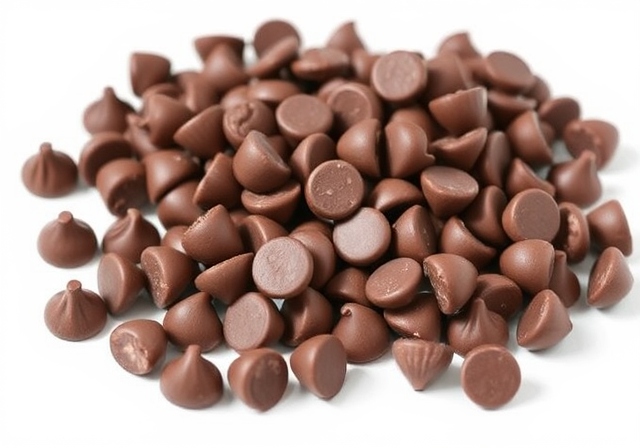
When using chocolate chips, portioning out about 1/4 cup gives you a close approximation of 1 ounce.
This is useful when a recipe calls for chocolate chips. However, chip size, and shape can affect the volume so the measurement is an approximation.
If you need 2 ounces, you can estimate approximately 1/2 cup. For 4 ounces, approximately 1 cup is a useful starting point.
For exact baking measurements, weight is still preferable.
Chocolate Chunks and Wafers
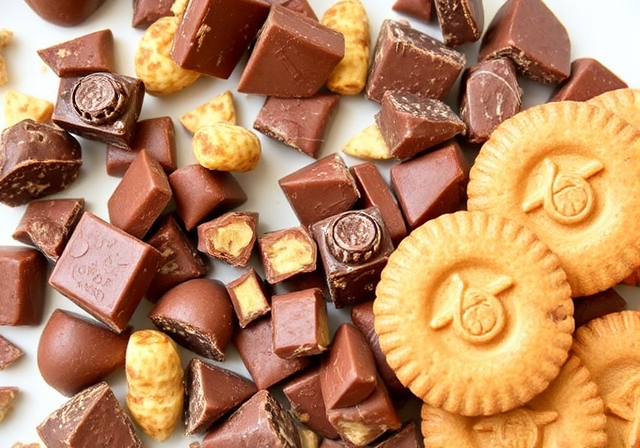
Chocolate Chunks
Chocolate chunks vary greatly in size, which makes volume measurements less precise.
Chocolate chunks can vary in size, so larger pieces may take up more space than smaller ones.
If you are cutting chocolate from a bar making pieces of a similar size can make your estimates more consistent.
Chocolate Wafers
Chocolate wafers are usually more uniform than irregular chunks but their size and thickness vary by brand.
A small amount of wafers may look similar to 1 ounce of chocolate chips by volume but the exact volume depends on the wafer dimensions and how tightly they are packed.
For recipes that require precise amounts of melted chocolate, weighing wafers is the better option.
How Do You Measure 1 Oz of Chocolate Without a Scale?
Start by identifying the type of chocolate you have and use a volume or portion estimate.
Here are the easiest ways:
Method 1: The Chocolate Bar Sections
Check total weight on the package, and count the same pieces. For example 4 ounce bar with 4 equal sections means each section is approximately 1 ounce.
Method 2: Use a Measuring Cup for Chocolate Chips
The same 1/4-cup estimate works well when measuring chocolate chips by volume.
This method is great when you need to quickly measure for cookies, muffins, pancakes, or similar recipes.
Method 3: Use a tablespoon for small quantities
Tablespoons can be used to estimate small quantities but the exact weight will depend on the type, and shape of chocolate.
Volume measurements are less reliable than weight because chocolate pieces can have different shapes and sizes.
Method 4: Use Package Info
Some chocolate products have serving information that tells you how many pieces, or squares are in a serving. If the serving size is 1 ounce, this can give you a useful visual reference.
1 Oz Chocolate Serving Size
A typical chocolate serving may be listed as 28 grams. A chocolate bar can vary by brand, so 1 ounce may equal one or more scored squares.
The calorie content of 1 ounce varies based on the type of chocolate, and its ingredients. Dark chocolate, milk chocolate, white chocolate can have different calorie and nutrient profiles.
If you are tracking calories or portions, check the nutrition label because the listed serving size and calorie count can vary by product.
How Many Ounces of Chocolate Are in a Cup?
The answer depends on the type, and form of chocolate.
This estimate is based on the common measure of 4 ounces per cup of chocolate chips.
However, this is not a universal conversion for every type of chocolate. Chopped chocolate, chunks, wafers or grated chocolate can be more, or less dense affecting the weight per cup.
This is why recipes that require precision often specify chocolate by weight.
1 Oz Chocolate in Grams
If you need to convert ounces to grams, use the following common measurements:
| Ounces | Grams |
| 1 oz | 28.35 g |
| 2 oz | 56.7 g |
| 3 oz | 85.05 g |
| 4 oz | 113.4 g |
| 8 oz | 226.8 g |
For everyday baking, rounding to the nearest gram is usually fine.
How to Substitute 1 Oz of Chocolate?
Sometimes a recipe calls for a type of chocolate that you do not have. The best substitute depends on the recipe.
Substitution for Unsweetened Chocolate
If a recipe calls for 1 ounce of unsweetened chocolate, one commonly used substitution is:
- 3 tablespoons unsweetened high flavanol cocoa powder
- 1 tablespoon fat, such as butter
This approximation can work in some baking recipes but the exact substitution depends on the recipe, and the type of cocoa powder being used.
Another option is to use semi-sweet or dark chocolate and adjust the added sugar in the recipe. This will change the sweetness and flavor, so consider the recipe's total sugar content.
Dark Chocolate Substitutes
If you need 1 ounce of dark chocolate, semi-sweet chocolate can often be used in a baking recipe in the same approximate weight.
Milk chocolate can work in some recipes but it usually has more sugar, milk ingredients, and a milder cocoa flavor.
If you substitute milk chocolate for dark chocolate, the finished recipe may taste sweeter, and less intense.
Practical Tips for Measuring Chocolate
Use a Kitchen Scale When Accuracy Matters
A kitchen scale is the most accurate way to measure chocolate by weight.
This is especially useful for
- Baking
- Chocolate tempering
- Ganache
- Candy making
- Recipes with specific chocolate to liquid ratios
Estimate Using Bar Weight
If you can't measure the chocolate, check the total weight of the bar and divide it by the number of equal sections.
This is often the easiest way to estimate a 1 oz chocolate serving size from a standard bar.
Use Volume as an Approximation
For chocolate chips, about 1/4 cup is a practical estimate for 1 ounce.
For chopped chocolate and chunks, volume is less reliable because the size of each piece can vary.
Do Not Assume Every Chocolate Square Equals 1 Ounce
A chocolate square does not have a universal weight. One square from one brand could weigh significantly more or less than a square from another.
Always check the package weight, and the number of pieces before assuming how much a single square weighs.
Final Measurement Guide
Measuring chocolate by weight gives the most consistent results, especially for baking and recipes with precise ingredient ratios. When that option isn't available, package information and simple portion estimates can help.
For chocolate chips, about 1/4 cup is a useful estimate for 1 ounce. For a 4-ounce bar divided into four equal sections, one section is roughly 1 ounce. Since chocolate bars, chunks, and wafers vary in size and density, volume estimates may differ between products.
For the closest measurement, check the package details and use the method that best matches the type of chocolate you're working with.
Frequently Asked Questions
1. What does 1 oz of chocolate look like?
One ounce of chocolate weighs about 28 grams. Depending on the product, it may look like one-quarter of a 4-ounce bar, about 1/4 cup of chocolate chips or a small handful of chocolate chunks.
2. How many chocolate chips are in 1 oz?
The exact number varies based on chip size, and brand. Rather than counting individual chips, use about 1/4 cup as a general portion estimate when measuring chocolate chips by volume.
3. How much is 1 oz of chocolate in cups?
For standard chocolate chips, 1 ounce is approximately 1/4 cup. Chopped chocolate, chunks, and wafers can have different volume to weight ratios.
4. Is 1 oz of chocolate a serving?
A 1-ounce portion is a common serving size used on many chocolate nutrition labels but serving sizes vary by product. Always check the package for manufacturer's stated serving size.
5. How do you measure 1 oz of chocolate?
For chocolate chips use about ¼ cup. For a chocolate bar, check the package weight then divide the bar into equal sections. For better accuracy, weigh the chocolate with a kitchen scale before adding it to your recipe.