
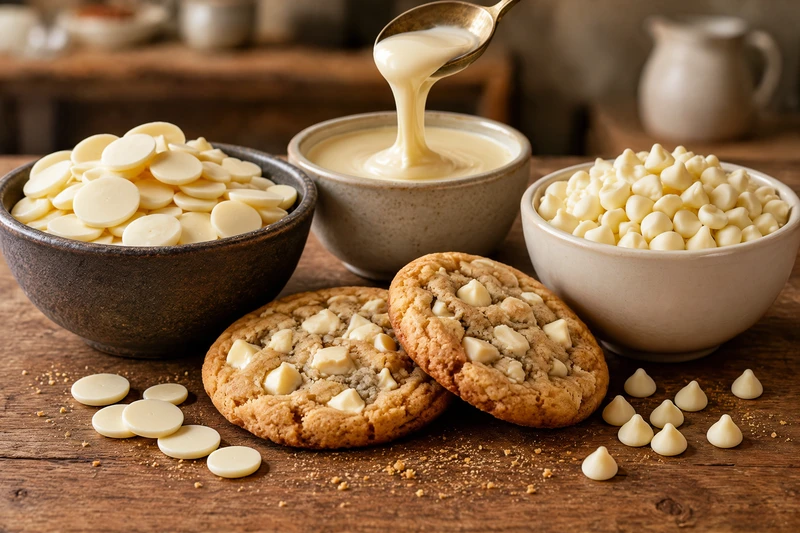
What kind of white chocolate you use can influence how your cookies bake, how your ganache sets, and how well your chocolate decorations hold their shape. White chocolate couverture and white chocolate chips are used for different purposes, so it is dependent on the recipe which is the best option.
In this guide we will compare white chocolate couverture and white chocolate chips, talk about which is best for different baking projects and answer a common question: can white chocolate chips be substituted for couverture chocolate?
Key Differences Between White Chocolate Couverture and Chips
The main differences are their formulation, melting behavior and intended use. Couverture is commonly used for confectionery, chips are designed for easy use in baked goods.
|
Feature |
White Chocolate Couverture |
White Chocolate Chips |
|
Typical use |
Coatings, molded sweets and decorations |
Cookies, muffins and dessert bars |
|
Form |
Bars, blocks or callets |
Small, chip-shaped pieces |
|
Cocoa butter |
Often formulated with a relatively high proportion |
Varies by manufacturer |
|
Melted consistency |
Generally fluid when melted correctly |
May be thicker or retain some shape |
|
Tempering |
Usually needed for glossy, firm coatings |
Generally unnecessary for ordinary baking |
|
Preparation |
May need chopping and careful temperature control |
Usually ready to use |
Important: Check the product ingredients before buying. Some products sold as white chocolate chips use different fats or formulations, which can affect their flavor and performance.
Which One Is Best for Your Recipe?
The best white chocolate for baking will depend on what you want your finished dessert to be like.
Use couverture for chocolate work
Couverture is used in recipes when you want the melted chocolate to flow evenly or form a smooth shell.
- Truffles and candies: Form an outer shell of chocolate.
- Molded chocolates: Fill molds to make shaped candies.
- Ganache and fillings: Use in recipes that call for melted white chocolate.
- Dessert decorations: Pipe lines for dessert decorations, make shapes or drizzle chocolate over pastries.
Most coatings that require a firm texture and a glossy finish require proper tempering.
Choose chips for everyday baking
White chocolate chips are convenient for adding small pieces to a baked dessert.
- Cookies: Add creamy white chocolate pieces to the dough.
- Muffins: Stir chocolate into the batter.
- Brownies and dessert bars: Fold in small pockets of white chocolate.
- Pancakes and sweet breads: Fold chips into batter before baking or cooking.
The chips may become soft on heating without melting completely. It is contingent upon what you put in, and how you cook it.
Can You Substitute White Chocolate Chips for Couverture Chocolate?
Yes, you can swap out white chocolate chips for couverture in some recipes, but the results can vary.
Chips are often a suitable replacement for chocolate pieces in recipes for cookies, muffins, and similar baked goods. Chips can be a little harder to work with for molded chocolates, thin coatings and detailed decorations because melted chocolate chips may be thicker.
Before replacing, take these points into consideration:
- Check the recipe: Decide if you want the chocolate to flow freely or simply add flavor.
- Review the ingredients: The fat content and other fats can affect how the chocolate melts.
- Test a small amount: Melt a few chips to test consistency before making a full batch.
- Avoid adding water: Water can cause melted chocolate to seize and become grainy.
Generally couverture is the safer bet if you’re relying on the smooth coating to make your recipe. For recipes that require chocolate pieces, chips are usually more convenient.
How to Melt White Chocolate Properly
White chocolate is delicate in terms of heat, so a slow melting process helps prevent scorching and separation.
Microwave method
- Place the chocolate in a clean, dry, microwave-safe bowl.
- Heat for 10–15 seconds at a time.
- Stir after each interval to distribute the heat.
- Stop heating when most of the pieces have melted.
- Stir until the remaining pieces dissolve.
Double-boiler method
Put the chocolate in a heat safe bowl over a pot of hot water. Keep the bowl above the water rather than touching the surface. Prevent steam and water from getting into the chocolate.
If you're going to make molded chocolates or dipped candies with couverture, remember that melting and tempering are two different steps. Tempering stabilizes the chocolate so it can set.
Find the Right White Chocolate for Your Baking Needs
Pick the white chocolate that the task calls for, not the one that looks good. Couverture is good for confectionery and smooth chocolate finishes. Chips are handy for recipes that call for chocolate bits.
Check the ingredients, melting instructions and use before you buy. These details will help you to choose the right product for your next batch of cookies, homemade candies or chocolate decorations.
Frequently Asked Questions
Is white chocolate couverture real chocolate?
Yes, couverture is white chocolate when it meets the standards for white chocolate. It is typically made from cocoa butter, sugar and milk ingredients, but does not contain any cocoa solids. See the product label for ingredients and suitability for your recipe.
Why are some white chocolate chips harder to melt?
Some chip formulations are able to hold their shape through the baking process. They can melt differently depending on the percentage of cocoa butter and other fats they have. Gentle heat and frequent stirring helps but the result may be thicker than melted couverture.
Can I use white chocolate chips to make ganache?
Yes, but it is contingent upon the brand and recipe consistency. Some chips will make a thicker ganache than couverture. Go for a tried and tested recipe with a decent chocolate to cream ratio. Gently heat the ingredients and let the mixture cool as directed before using as a filling or topping.
Does white chocolate couverture need tempering?
Tempered couverture is usually recommended for dipped candies, molded chocolates and decorative shells. This gives the chocolate a shiny surface and a firm texture when it sets into place. If you are mixing melted couverture into cake batter or a filling, you usually don't need to temper couverture.
Can white chocolate couverture be used in cookies?
Yes. You can chop up couverture and fold it into cookie dough. The pieces may melt differently than baking chips, so the cookies might have a different texture. Break the chocolate into pieces of similar size so that it distributes evenly.
How should I store white chocolate?
Store white chocolate in an airtight container in a cool, dry place. Keep away from direct sunlight and strong odors. Avoid rapid temperature changes that may cause condensation. See package for recommended shelf life and follow storage instructions provided by manufacturer.